Why Keeping the Weight Off After 40 Is Harder Than Losing It In the First Place

You did the hard part.
You stuck to the plan. You passed on the bread basket. You showed up to the gym when you really didn't want to. And the weight came off.
Then, slowly, almost without noticing, it started to creep back. Not because you gave up. Not because you stopped caring. But because somewhere around 40, your body quietly changed the rules.
Sound familiar? You're not imagining it. Weight loss maintenance after 40 is a real, biology-driven challenge. And the old playbook — eat less, move more — just doesn't cut it anymore.
Here's what's actually going on, and what works now.

Weight Loss Maintenance After 40 Notes
After 40, hormonal shifts, muscle loss, and a slower metabolism make weight loss maintenance genuinely harder — not just a willpower problem.
Women face estrogen and progesterone decline, which increases belly fat and disrupts sleep and appetite signals.
Men experience a drop in testosterone of roughly 1–2% per year after age 30–40, leading to more body fat and less muscle.
Practical strategies like strength training, prioritizing protein, managing stress, and improving sleep all support long-term weight loss maintenance.
Generic diets don't account for the hormonal and metabolic changes that happen after 40 — personalized medical weight loss does.
A medically supervised program gives you the tools, support, and accountability to keep the weight off for good.
Why Your Body Makes Weight Loss Maintenance Harder After 40
Your metabolism isn't broken. It's adapting. And those adaptations make keeping weight off genuinely more difficult.
Starting in your 40s, muscle mass begins to decline by roughly 0.5 to 1% per year. Since muscle burns more calories at rest than fat does, losing it quietly lowers how many calories your body needs each day. You can be eating the exact same way you always have and still gain weight.
That's not a character flaw. That's biology.
Insulin sensitivity also tends to decrease with age. Your cells become less efficient at responding to blood sugar signals, which promotes fat storage and drives cravings. Add a naturally slower resting metabolism to the mix and you can see why weight loss maintenance starts feeling like an uphill battle.
The good news is that understanding what's happening is the first step to doing something about it.
Weight Loss Maintenance for Women: What's Actually Going On
For women, the 40s often bring the beginning of perimenopause and with it, a significant hormonal shift.
As estrogen and progesterone decline, the body loses key regulators of fat distribution and metabolism.
Lower estrogen specifically promotes fat storage in the abdomen, which is why many women notice their waistline changing even when the number on the scale hasn't moved much.
Progesterone loss also disrupts sleep. Poor sleep directly affects the hormones that regulate hunger, leptin and ghrelin, which means you wake up hungrier and less satisfied after meals. It's a cycle that makes weight loss maintenance for women especially challenging during midlife.
Thyroid function also tends to slow after 40, and subclinical hypothyroidism often goes undetected. A sluggish thyroid compounds the metabolic slowdown and makes maintaining weight loss even harder.
The takeaway: for women, weight loss maintenance is about more than calories. It's about addressing the hormonal environment those calories live in.
Weight Loss Maintenance for Men: The Testosterone Factor
Men go through their own version of midlife hormonal change, and it often flies under the radar.
Testosterone levels decline by roughly 1–2% per year after age 30 to 40.
Lower testosterone is directly tied to reduced muscle mass and increased body fat, particularly the visceral kind that accumulates around the organs.
DHEA, a hormone that supports muscle and energy production, also declines by about 2–3% per year starting in the 30s. The result is a body that's more prone to storing fat and less equipped to build the muscle that keeps metabolism running efficiently.
Many men chalk this up to getting older and push harder at the gym. But working out more doesn't fix the underlying hormonal shift.
Weight loss maintenance for men after 40 requires a smarter approach, not just a harder one.
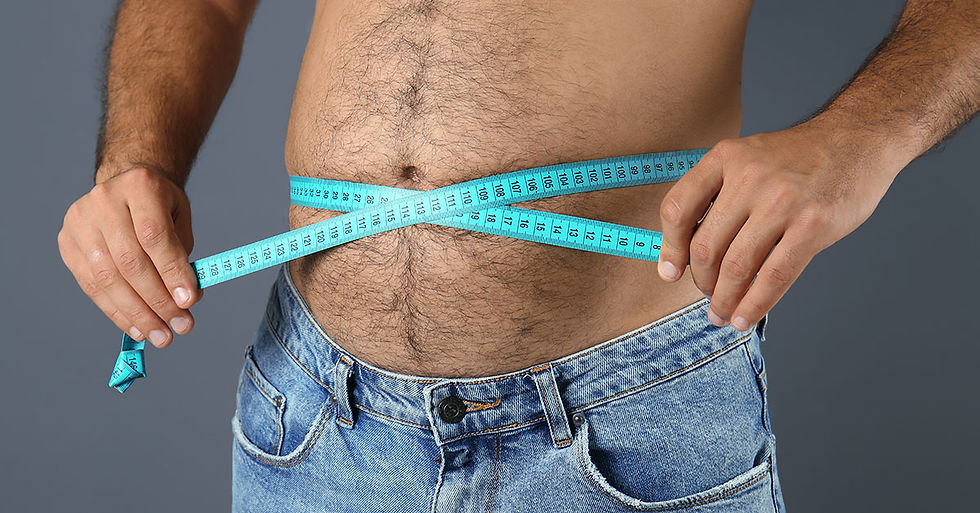
Practical Tips for Weight Loss Maintenance After 40
Whether you're a man or a woman, these strategies support long-term weight loss maintenance when your body has shifted into a different gear.
Prioritize Protein at Every Meal
Protein preserves muscle mass, which is the single biggest factor in keeping your metabolism working in your favor.
Aim to include a quality protein source at breakfast, lunch, and dinner. Think eggs, Greek yogurt, chicken, fish, or legumes.
Make Strength Training Non-Negotiable
Cardio is great. But after 40, resistance training is the real anchor for weight loss maintenance.
Building and preserving muscle raises your resting metabolic rate, improves insulin sensitivity, and supports fat loss.
Two to three sessions per week makes a meaningful difference.
Treat Sleep Like a Medical Priority
Seven or more hours of quality sleep isn't a luxury — it's a metabolic necessity.
Poor sleep disrupts the hormones that control hunger and fat storage. If you're consistently sleeping fewer than seven hours, that's a real obstacle to weight loss maintenance that no diet can fully override.
Manage Stress Seriously
Chronic stress elevates cortisol, which drives abdominal fat accumulation and worsens insulin resistance.
According to the Mayo Clinic, cortisol plays a direct role in weight gain around the midsection. Daily stress management, whether that's walking, journaling, or simply protecting time to decompress, is a weight maintenance strategy.
Stay Consistent, Not Perfect
Small, sustainable habits outperform intense, short-term efforts every time. Weight loss maintenance after 40 is a long game.
Consistency with movement, protein, sleep, and stress management builds the foundation that holds.
Why Medical Weight Loss Works Better After 40
Here's where we'll take a side: generic diets are not designed for what's happening in your body after 40.
A one-size-fits-all calorie plan doesn't account for hormonal imbalances. It doesn't adjust for a slowing thyroid. It doesn't address the metabolic adaptation your body undergoes as you age. And it certainly doesn't provide the ongoing support that makes weight loss maintenance possible month after month.
Medical weight loss does.
At NJ Weight Loss Center in Hazlet, the approach is personalized and medically supervised from the start. That means your plan is built around your body, your health history, and your goals — not a generic template.
For many patients, GLP-1 medications like semaglutide are a clinically proven part of that plan. These medications work at the hormonal level, targeting appetite signals in a way that diet willpower simply can't.
Studies have shown semaglutide can result in a weight loss of 20% or more over 12 to 52 weeks when combined with lifestyle changes. That's the kind of result that's difficult to achieve through diet and exercise alone, especially after 40.
According to CDC data cited in recent research, adults aged 40 to 59 are approximately 30% more likely to have obesity than younger adults — and nearly 46.4% of adults in that age group meet the clinical definition.
That's not a motivation problem. That's a biology problem that deserves a medical solution.
Beyond the medication, medically supervised programs offer ongoing accountability. Regular check-ins, adjusted plans, and expert support are what keep patients on track past the initial weight loss phase and into true, lasting weight loss maintenance.
Ready to Stop Starting Over?
If you've lost weight before and watched it come back, you already know how discouraging that cycle feels. The answer isn't trying harder. It's trying smarter, with a plan that's actually built for where your body is now.
The team at NJ Weight Loss Center is here to help you break the cycle. We offer a free consultation so you can learn exactly what a personalized medical weight loss program looks like for you, no pressure and no commitment required.
Your 40s don't have to mean giving up on your goals. They can be the decade you finally get the right support to reach them.
Weight Loss Maintenance After 40 FAQs
Why is weight loss maintenance after 40 so much harder?
After 40, your body undergoes real physiological changes that make keeping weight off more difficult. Muscle mass declines, metabolism slows, and hormones shift in ways that promote fat storage and increase hunger signals. These are biological changes, not motivation issues. Understanding the root cause is the first step. A medically supervised approach helps address these changes directly rather than working against them with willpower alone.
Is weight loss maintenance different for men and women after 40?
Yes, though both face significant hormonal changes. Women experience declining estrogen and progesterone, which shifts fat distribution toward the abdomen and disrupts sleep and appetite regulation. Men deal with declining testosterone, which reduces muscle mass and increases visceral fat. Both changes respond well to targeted strategies that go beyond standard calorie-restriction diets.
Can medical weight loss help me keep the weight off long-term?
Medical weight loss is specifically designed for long-term success, not just short-term results. Personalized plans, medically supervised support, and options like GLP-1 medications address the underlying hormonal and metabolic factors that make weight loss maintenance difficult after 40. Patients who work with a medical team have the accountability and clinical tools to maintain results over time. Learn more about what a program looks like at NJ Weight Loss Center.



soi cau mb nhìn qua tưởng lại kiểu bài chung chung theo ngày thôi, mà đọc lướt mới thấy họ để tiêu đề “Soi cầu MB ngày 3 9 2026” khá thẳng thắn nên cũng dễ kiểm tra đúng ngày mình cần. Mình vốn hơi nghi ngờ mấy trang dự đoán, nhưng ở đây họ nói rõ là dựa trên thống kê kết quả các lần quay trước rồi mới gợi ý cặp số có xác suất cao trong ngày, nên ít nhất cảm giác có căn cứ hơn. Chữ nghĩa không dài dòng. Các đoạn chia khối ổn. Lướt xuống là gặp mục “Dự đoán XSMB 3 9 2026” tách riêng. Nhìn phát biết ngay đang nói đúng mốc…
Bài của bạn trình bày ngắn gọn mà dễ hiểu, mình đọc liền một lượt là nắm được ý nên theo dõi rất thoải mái, cảm ơn bạn đã chia sẻ. Mình cũng có thói quen xem thống kê XSMB mỗi ngày, nhưng hồi trước toàn phải mở nhiều nguồn khác nhau để đối chiếu nên khá mất công. Về sau mình tự ghi chú và gom lại cho tiện kiểm tra, đỡ bị sót thông tin khi bận. Thỉnh thoảng mình cũng vào soicau247.com để lướt nhanh số liệu theo từng ngày, kiểu xem cho tiện chứ không phải tìm kiếm gì phức tạp. Nếu ai cũng hay cập nhật thường xuyên như mình thì có thể xem thêm…
Mình mua vé số chủ yếu cho vui thôi, coi như thêm chút hồi hộp cuối ngày, trúng thì mừng mà không trúng cũng chẳng áp lực. Trước đây nghe bạn bè bàn đủ thứ kiểu “cầu” với “kèo” nên mình tò mò thử tìm hiểu, nhưng mới đầu thấy loạn hết cả lên. Sau một thời gian theo dõi, mình bắt đầu ghi lại vài nhận định mình đọc được, rồi so lại kết quả để xem có phải mình đang tự gán ý nghĩa không. Thỉnh thoảng mình lướt soicauxsmb.io để có thêm chuyện tám với tụi bạn, nhưng mình luôn tự nhắc là đừng tin tuyệt đối. Có hôm trúng nhẹ thì vui, có hôm sai hẳn…